Showing posts with label Health Care. Show all posts

Tuesday, March 30, 2010

What's the next step for policy makers?

The next step for policymakers is increasing college completion rates.

This past weekend President Obama make his weekly address, and make the "two [key] issues that make up this [(Health Care and Education Reconciliation Act)] law: health care and higher education:"
Education. Health care. Two of the most important pillars of a strong America grew stronger this week. These achievements don't represent the end of our challenges; nor do they signify the end of the work that faces our country. But what they do represent is real and major reform. What they show is that we're a nation still capable of doing big things. What they prove is what's possible when we can come together to overcome the politics of the moment; push back on the special interests; and look beyond the next election to do what's right for the next generation.
I agree with Obama that making Universal Health Care a "law of the land", and higher education more popular, will not end our problems or end the work for our country.

When reconciliation passed the Health Care Reform Bill into a Law, it also gave money "to low- income college students attending school on a Pell Grant". Although this is money may not personally help all college students, I do feel that this is an important necessity for many students who are unable to go to college without this extra money from the government.

Later on in Obama's speech, he stated how this money will help students during this country's time of need:
No doubt, increasing financial aid during a time of high unemployment, stagnant wages and increasing tuition is a necessary step. Hopefully, this will get more people into higher education. Our economic sustainability demands a better educated work force But, it's not enough - especially when the latest attempt to focus some efforts on postsecondary education reform, the reconciliation bill, ended up being one more example of education sacrificing new resources to pay for rising health care costs.
The article also points out how education effects our economy. Higher paying jobs usually require a higher education that High school. If there is a lower number of college graduates than normal, there are less people earning a higher amount of money. If they don not have the money to spend, the economy goes down. Since many either do not have a college education, and many do not have jobs because of the economic crisis, the economy goes down even further.

This quote from the article, "Moving forward, the goal should be clear: We should be investing our existing tax dollars in students who complete college. Our future depends on it." I think is a definite possibility, but also partially unrealistic. If we were to spend our existing tax dollars on students who complete college, other systems of our country will start to fail. The most recent example would be that the Universal Health Care system will start to not receive enough money.

Wednesday, March 24, 2010

The amendment for Student Loaning


Student aid initiative, as part of the final amendments to the heath care bill, will be eliminating "a $60 billion program that supports private student loans with federal subsidies and replacing it with government lending to students". Out of the total $61 billion in savings over 10 years, $36 billion will go to Pell grants, and smaller portions will go "towards reducing the deficit and to various Democratic priorities, including community colleges, historically black colleges and universities, and caps on loan payments".

The Pell grant in the past
once covered more than two-thirds of total costs at a public university... [but] now covers about one-third... the maximum grant could be scaled back by more than half to $2,150 and at least 500,000 students could be dropped from the program... So if this legislation did not pass, you would see catastrophic cuts to the Pell grant program, effectively slamming the door shut for hundreds of thousands of students, if not millions, who rely on the Pell grant program to go to school
said Rich Williams, higher education associate for U.S. PIRG, the federation fo state Public Interest Research Groups.

One of Kentucky's state representatives, Brett Guthrie, stated in opposition that "Instead of making student loans more affordable or preserving choice, competition and innovation in the loan program, Democrats are taking money from struggling students' pockets to help pay for a government takeover of health care". Although there is truth in his statement, I do not think that this is over. I hope the government will come up with a way for the students to gain money, and the government to use money for correct purposes..

To summarize the his position of the student loan amendment, Daniel de Vise wrote
The amount directed at Pell grants would drop from $40 billion to $36 billion, and a portion of the smaller amount would go toward closing an unexpected shortfall in the grant program, oversubscribed because of the recession. The annual Pell grant would rise to $5,975 by 2017 from the current $5,550, and for the first time, it would be linked to the consumer price index. In the original House bill, the Pell target was $6,900.

Community colleges would get $2 billion, down from $10 billion in the original bill. More than $20 billion in initiatives for early education, K-12 school modernization and student loan interest-rate reduction would be eliminated. But a $2.6 billion investment in historically black colleges would survive. The new bill also includes a $1.5 billion initiative that would cap a borrower's monthly loan payments at 10 percent of income, down from 15 percent.


What I did not like about this article was that it was biased. If someone reads this article, they only learn of the negatives of the student loan amendment in the Health Care Bill. To make the article better, I think that there should have been some positives of the amendment.

This is personal to me because I was thinking of applying for the Pell grant program for college. this this information, it shows me that I have a lower chance of getting the grant. Without the money, I may not be able to go to the college of my choice to get the degree that I want.

Tuesday, March 9, 2010

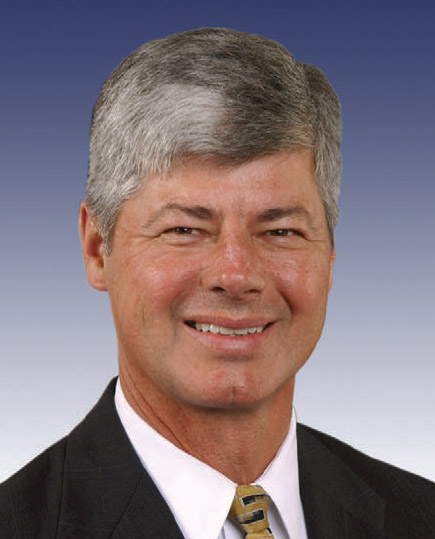
Congressman Bart Stupaks view of the health reform bills

Congressman Bart Stupak, representing Michigan's 1st District, stated last week that it any federal funding for abortion was on the health care reform, they are "prepared to strike [it] down". On Monday "he is 'more optimistic' than he was... regarding legislative negotiations." Stupak says that both he and President Obama do not

want to expand or restrict current law (on abortion). [Although Stupak is] satisfied with the current House bill... he has been vocal in his opposition to the Senate bill... the Senate bill is 'unacceptable' on the issue of abortion...[White House spokesman Robert Gibbs says] ultimately, 'this is not a bill about abortion. This is about health care reform.'... Stupak's coalition, saying, 'The bottom line is that Pelosi needs Stupak's supporters to pass health care reform. She doesn't have the votes any other way.' 'Now, she doesn't want to alienate the pro-choicers. So that's why she, Hoyer and Stupak are working on language that's more conservative than Nelson's in the Senate but a bit more liberal than Stupak's. How they thread that needle is anyone's guess,' Stricherz said.
So pretty much Stupak is happy to pass the House bill, but feels that the Senate be needs to be fixed, and that the only way Pelosi will get this reform passed is with Stupak's supporters.

Tuesday, March 2, 2010

Obama's small speech


This past Thursday the Health Care Reform Summit was held. Both the Democrats and the Republican main leaders were there to argue and agree on the Health Care Reform.

After the Summit, Obama gave a mini speech.
Some main areas where Obama says the two party's agree is that the rise in cost of Health Care is a huge problem for families, small bissinesses and our federal budget. They also agreed that
"... small businesses and individuals should be allowed to participate in a new insurace market place that would allo them to get a better deal from insurance companies" Another area where Obama agrees with the two party's is that "people with preexisting problems should be able to get coverage".


A difference that Obama acknowledges is how people with preexisting problems should get coverage, and whether companies should be held accountable when they deny a person care or if they should arbitrarily raise premius. Obama also says in his little speech that he agrees with this.

Here are two (somewhat) inspiring quotes to get this done.

Obama said at the end of last Thursdays Summit that “I’m eager and willing to move forward with members of both pary’s on healthcare if the other side is serious about coming together to resolve our differences and get this done”

“Let’s get this done” says Obama at the end of this speech. Him saying means that he wants the refor to be passed because the United States needs it now not later. I agree with Obama’s last sentence.


Here is the video where I got my quotes from

Obama's Letter to the Congressional Leaders on Health Insurance Reform

In his letter to the Congressional Leaders on Health Insurance Reform March 2nd, he mentioned the Bipartisan Health Care Reform Summit. He stated that in the summit, he was glad that the opposing sides were able to show their difference, and share some common goals. He also has become convinced "that the Republican and Democratic approaches to health care have more in common than most people think."

Obama then listed some examples where the Democrats and Republicans agreed. The three main ideas that the two party's agreed on was


“the need to reform our insurance markets. We agree on the idea of allowing small businesses and individuals who lack insurance to join together to increase their purchasing power so they can enjoy greater choices and lower prices. And we agree on the dire need to wring out waste, fraud and abuse and get control of skyrocketing health care costs.”

Obama also listed some of the areas of disagreement between the Democrats and Republicans. These disagreements include "what role the oversight of the health insurance industry should play in reform". And Obama adds his opinion by stating that


“I believe we must insist on some common-sense rules of the road to hold insurance companies accountable for the decisions they make to raise premiums and deny coverage. I don’t believe we can afford to leave life-and-death decisions about health care for America’s families to the discretion of insurance company executives alone.”

Obama, in his letter to the Congressional Leaders on Health Insurance Reform, also goes to write the "four policy priorities identified by Republican Members at the meeting that [he is] exploring"